Treinen: The Future of Credit Union Advocacy Starts on the Global Stage
WOCCU CEO calls for coordinated local, national and international engagement at GAC 2026
04 March 2026
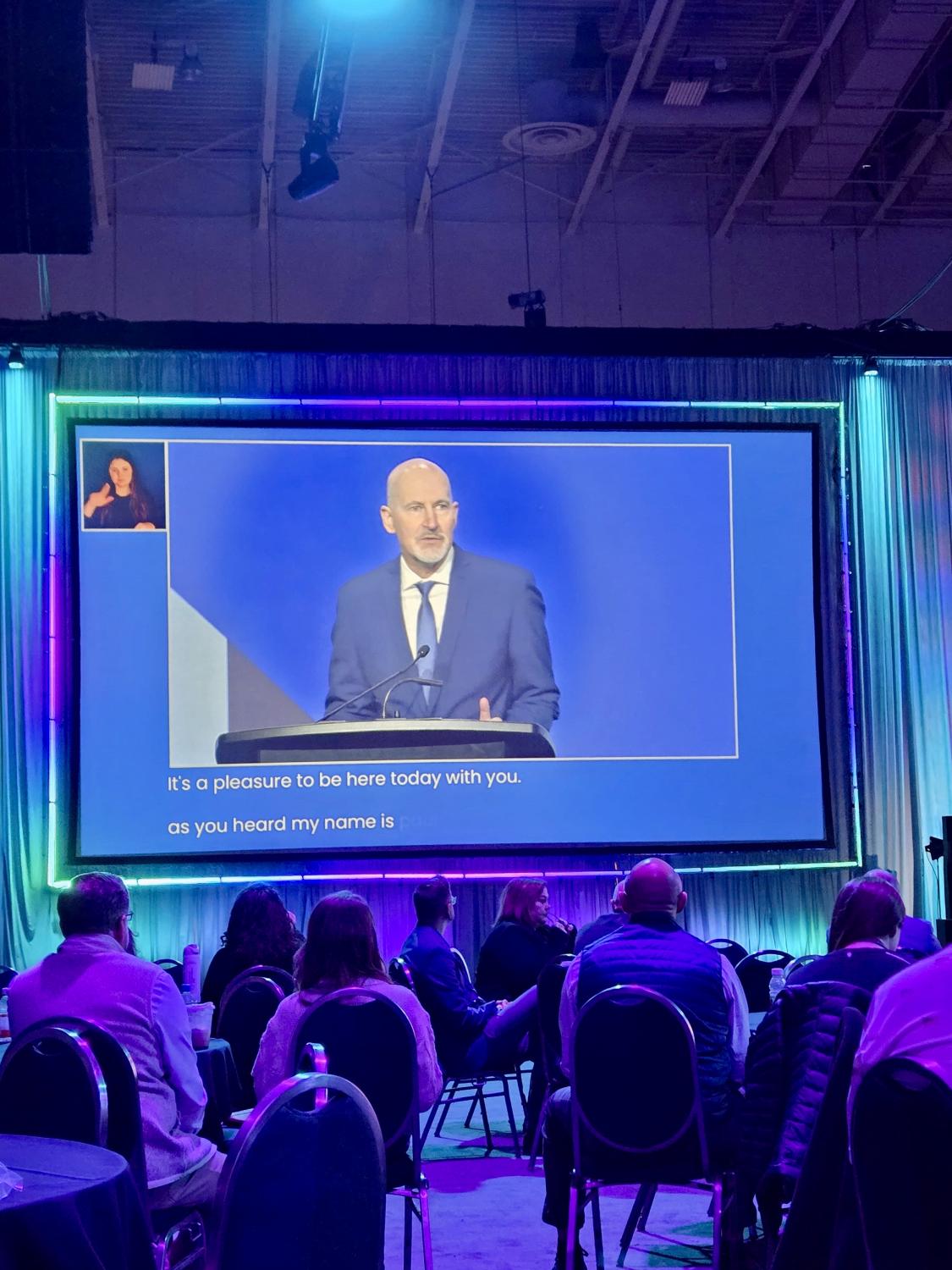
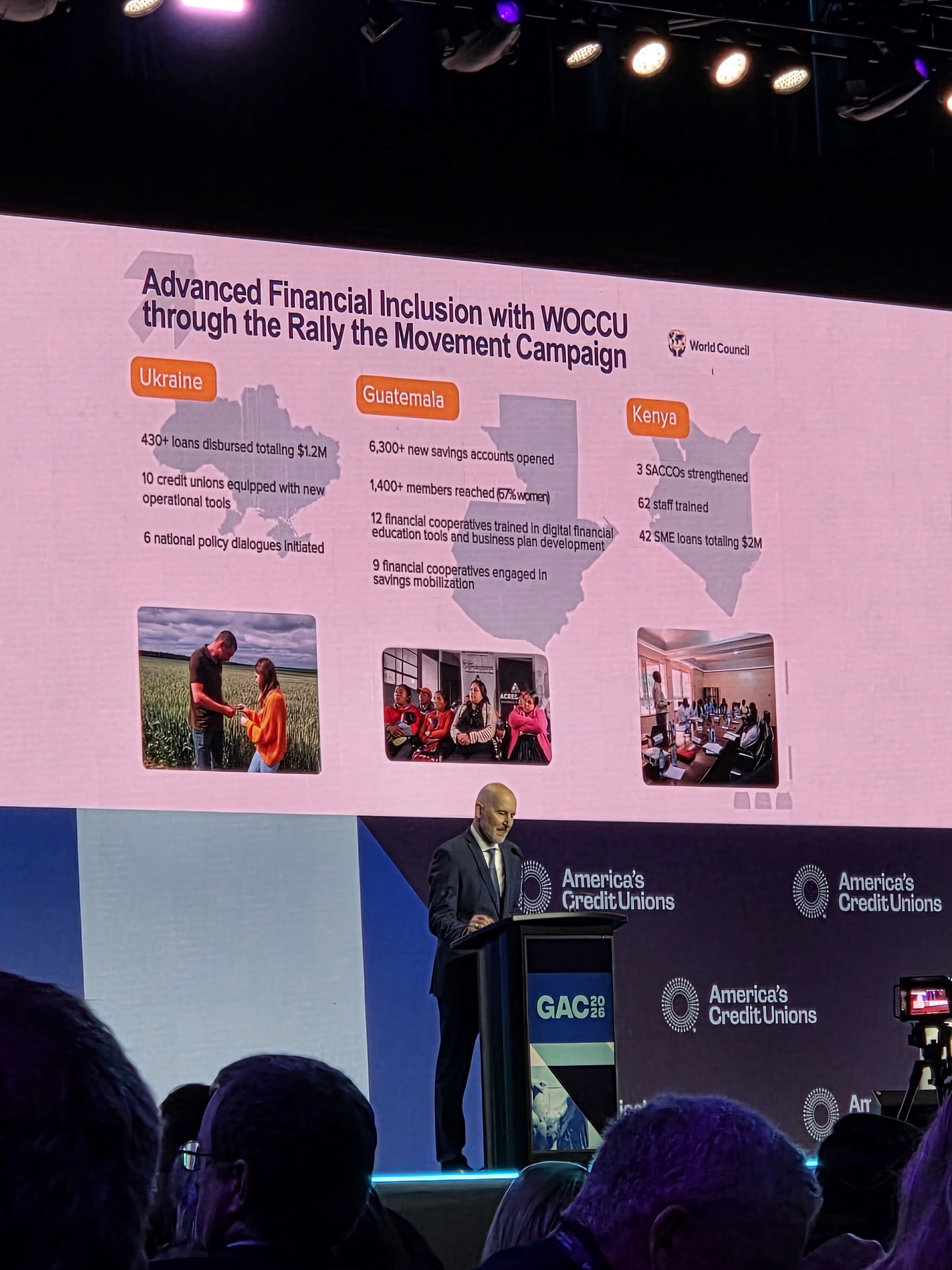
WASHINGTON, D.C.—World Council of Credit Unions (WOCCU) President and CEO Paul Treinen emphasized the importance of coordinated advocacy at the local, national and global levels during his mainstage address at America’s Credit Unions’ 2026 Governmental Affairs Conference (GAC).
A crowd of nearly 600 attendees erupted in applause Wednesday after Treinen spoke about the critical role global engagement plays in protecting and advancing the credit union model.
“At the end of the day, this work is not about policy for policy’s sake,” Treinen said. “It is about making sure credit unions can continue doing what they do best: serving members, strengthening communities and expanding access to financial services for people who need it most.”
That, Treinen explained, requires advocacy at every level—locally, nationally and globally.
While much of the advocacy work U.S. credit unions see firsthand happens in statehouses and on Capitol Hill, Treinen reminded attendees that many of the policies shaping the future of financial services originate in international forums long before they reach the United States.
He pointed to global conversations around capital standards, anti-money laundering rules, artificial intelligence, digital assets and cybersecurity as examples of issues that begin on the international stage and eventually influence national regulatory frameworks.
WOCCU’s role, he said, is to ensure the credit union perspective is represented early in those discussions and that global standards reflect the realities of cooperative financial institutions.
Treinen highlighted proportionality as a top priority for WOCCU’s international advocacy work—pushing for regulatory approaches that recognize the size, structure and risk profile of credit unions, rather than applying one-size-fits-all rules designed for the world’s largest banks.
By engaging directly with international standard-setting bodies and monitoring emerging policy trends, WOCCU also serves as an early warning system for the U.S. movement, helping leaders prepare for changes that may shape the future of financial services.
Treinen also thanked the U.S. credit union community for its continued partnership and support of global development efforts, noting the tangible impact those efforts have had in communities around the world. Through collaboration with the Worldwide Foundation for Credit Unions and the broader movement, credit unions have helped expand access to savings, credit and financial opportunity in countries including Ukraine, Guatemala and Kenya.
“When we step in together, we expand opportunity, strengthen local institutions and help communities build stability and resilience,” Treinen said.
He encouraged attendees to remain engaged in the global movement and invited them to continue the conversation at the World Credit Union Conference in Sydney this July, where leaders from around the world will gather to share ideas, strengthen partnerships and shape the future of cooperative finance.
Early-bird registration prices for the 2026 World Credit Union Conference are still available here.
Treinen’s message reinforced a central theme of this year’s GAC: that protecting and advancing the credit union difference requires a unified voice—one that works across communities, countries and continents.
World Council of Credit Unions (WOCCU) is the global trade association for the credit union movement, advancing cooperative finance worldwide. Through advocacy, education and more than 300 technical assistance programs in 90 countries, WOCCU advances financial inclusion and strengthens cooperative finance across diverse markets. Globally, more than 67,000 credit unions across over 100 countries serve more than 412 million people and hold over $3.8 Trillion (USD) in assets. Learn more at www.woccu.org.

Organization: World Council of Credit Unions
E-mail: lstanislawski@woccu.org

NOTE: Click on photos to view/download in high resolution.